
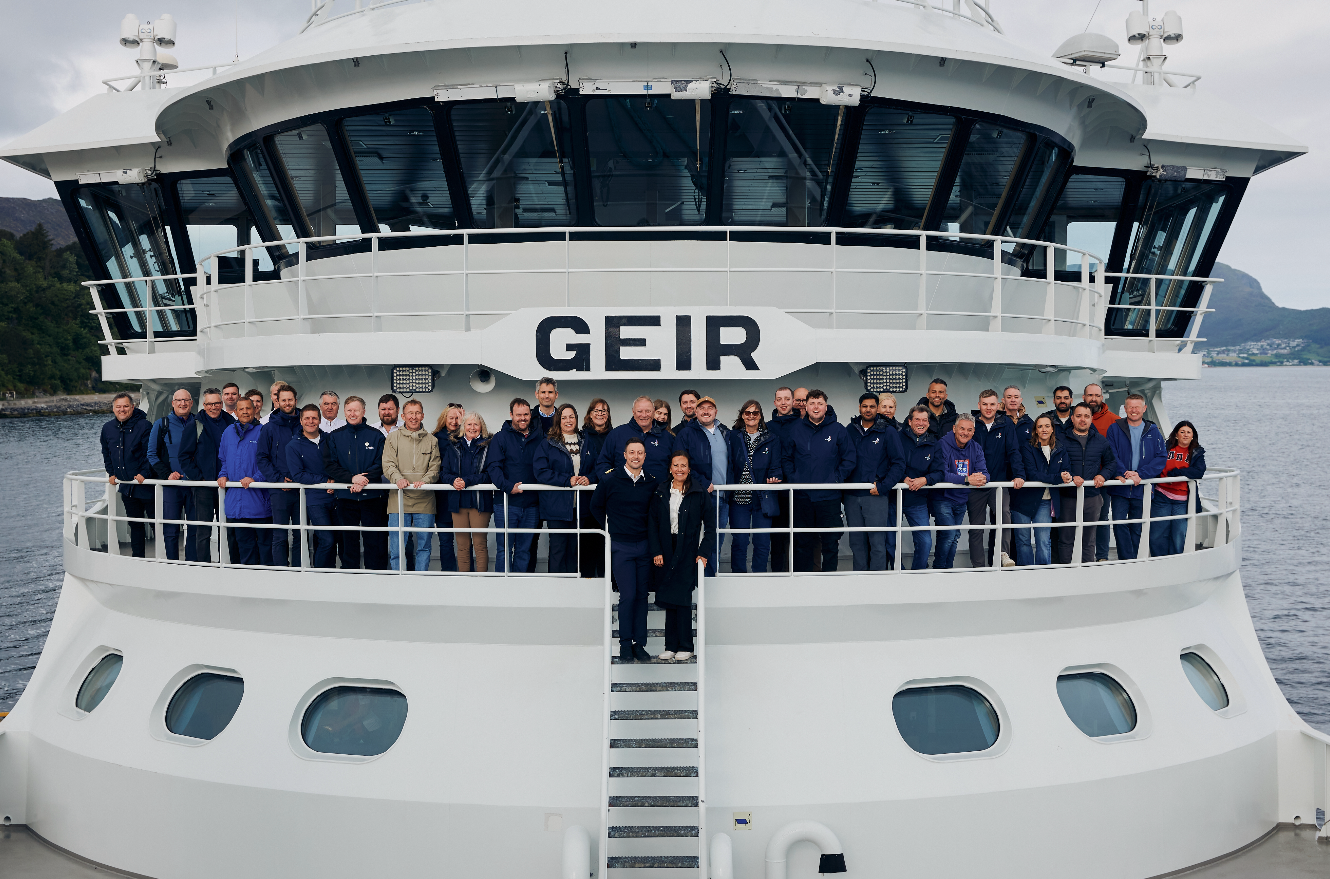
Norway's Minister of Fisheries and Oceans, Marianne Sivertsen Næss, joined a trip aboard the longliner Geir on Monday to learn more about fillet production and the fish-and-chips industry.
In 2025, Norway exported 144,000 tonnes of seafood to the United Kingdom, worth NOK 9.8 billion. This made the island nation Norway’s seventh-largest seafood market, representing an 11% increase in value compared with the previous year.
However, low quotas and high prices continue to create challenges for British fish-and-chips restaurants. Within the seafood sector, Iceland and the Faroe Islands are Norway’s main competitors, but the greatest threat is that consumers may replace fish with alternatives such as chicken or kebabs.
This was also part of the backdrop when this year’s winners of The National Fish & Chip Awards visited Norway and Ålesund this week. The three-day programme, organised by Fiskebåt and the Norwegian Seafood Council, included a trip aboard an ocean-going fishing vessel. This year, the longliner Geir served as host. Minister Marianne Sivertsen Næss also took part in the trip.
“It’s incredibly exciting. Not only to spend time with the winners of the Fish & Chip Awards, but also to see how work is carried out on board and how conscious the crew is about maintaining fish quality, which is something I care deeply about,” said Næss.
Every year, Britons consume around 200 million portions of fish and chips, and the industry generates revenues of approximately NOK 15 billion.
“The United Kingdom is the third-largest market for Norwegian fish by volume, so this is an important market and a relationship between our countries that we must continue to nurture,” she said.
One of the British visitors on the trip was Aman Dhesi, who runs a fish-and-chips restaurant in York, England. This year he won two awards: one for Marketing and Innovation, and another for being the best Takeaway business.
He says winning these awards has had a major impact on the restaurant’s finances.
“We have doubled our turnover, and it happened almost overnight. We’ve gained new customers from across the country, as well as from other parts of the world who come to York specifically to try our fish and chips,” said Dhesi.
In the United Kingdom, there are geographical differences in whether customers prefer cod or haddock. In York, haddock has traditionally been the dominant choice, although that has begun to change.
“We offer both haddock and cod. Before the awards, 95% of our sales were haddock, but that has now fallen to 85%, with cod making up the rest. This is linked to the fact that we have attracted customers from other regions who prefer cod,” he said.
Facts About the British Market
Around 10% of the total Northeast Atlantic cod catch ends up in the UK fish-and-chips industry each year.
Norwegian cod currently accounts for approximately 20% of all cod consumed in the United Kingdom.
Reduced cod quotas, increased competition for raw materials, and historically high cod prices are affecting both seafood buyers and sellers.
According to the analytics company Circana, the number of meals eaten outside the home in the UK fell by around 3% last year.
The same study found that visits to local fish-and-chips shops declined by as much as 8.5% during the same period.